The leave no trace guide: enjoy the outdoors without leaving your snacks, scraps, or reputation behind
Key Takeaways
A little forethought makes it easier to enjoy the bush without leaving extra work for the next visitors. We can keep our impact small by paying attention to place, conditions and local rules.
- Check forecasts, track conditions and local requirements before setting out.
- Stick to established tracks and campsites where available.
- Carry out rubbish, food scraps and hygiene products.
- Leave natural and cultural features where we find them.
- Keep fires, noise and wildlife encounters under control.
Plan ahead so the wilderness doesn’t have to improvise
A good trip often begins at the kitchen table, with a forecast, a map and an honest look at the group’s experience. Conditions can change quickly in Tasmania and elsewhere across Australia, so we do well to check local updates rather than rely on last week’s plan. Preparation is not about removing every surprise; it is about avoiding the ones we could have anticipated.
Check weather, trail conditions, permits, and local regulations
Before leaving, check the forecast and the latest information for the track or reserve, including closures, access changes, permits and fire restrictions. Rules differ between places, and conditions can shift after rain, wind or heat. A quick check can save us from arriving at a closed trailhead with a car full of snacks and nowhere sensible to go.
A simple planning note can keep the essential checks together. The details worth confirming depend on the place and the kind of trip:
| Check | What to confirm |
|---|---|
| Weather | Forecast and likely changes during the trip |
| Track | Current access, surface conditions and closures |
| Access | Permits, bookings or other local requirements |
| Restrictions | Fire rules, food storage guidance and seasonal notices |
Once we have checked these, we can adjust the route or timing before setting out. If the information is unclear, we should seek current guidance from the relevant land manager rather than guess.
Choose routes and gear that match your group’s skills
A route that looks short on a map may still involve steep ground, rough footing or a long return. We should choose a distance and difficulty that suit the least experienced member of the group, then leave room for breaks and slower conditions. Nobody wins a prize for being the most surprised by a climb.
The right gear depends on the route and forecast, as well as on how long we will be away. Comfortable footwear, suitable layers and reliable navigation help us travel with care, while a plan that allows the group to turn back makes changing course feel sensible rather than like failure.
Pack for changing conditions, emergencies, and proper food storage
Pack for the conditions we might meet, not only the pleasant ones we hope for. Water, food, weather protection, navigation and a way to respond to an emergency all deserve a place in the plan. We should also make sure everyone knows how food and scented items will be secured at camp.
Repackaging meals can reduce bulky wrappers, but it does not remove the need to carry every scrap back out. Keep rubbish contained as we go, and bring a bag that can hold food waste and hygiene products until we reach an appropriate disposal point.
Travel and camp on durable surfaces
Where we place our feet and tents shapes the ground’s chance to recover. In busier places, concentrating use on established tracks and campsites helps prevent new worn paths from spreading. In less-used areas, local guidance matters: spreading out can be appropriate in some settings, but wandering over fragile vegetation is not a clever way to find solitude.
Stick to established trails and campsites where available
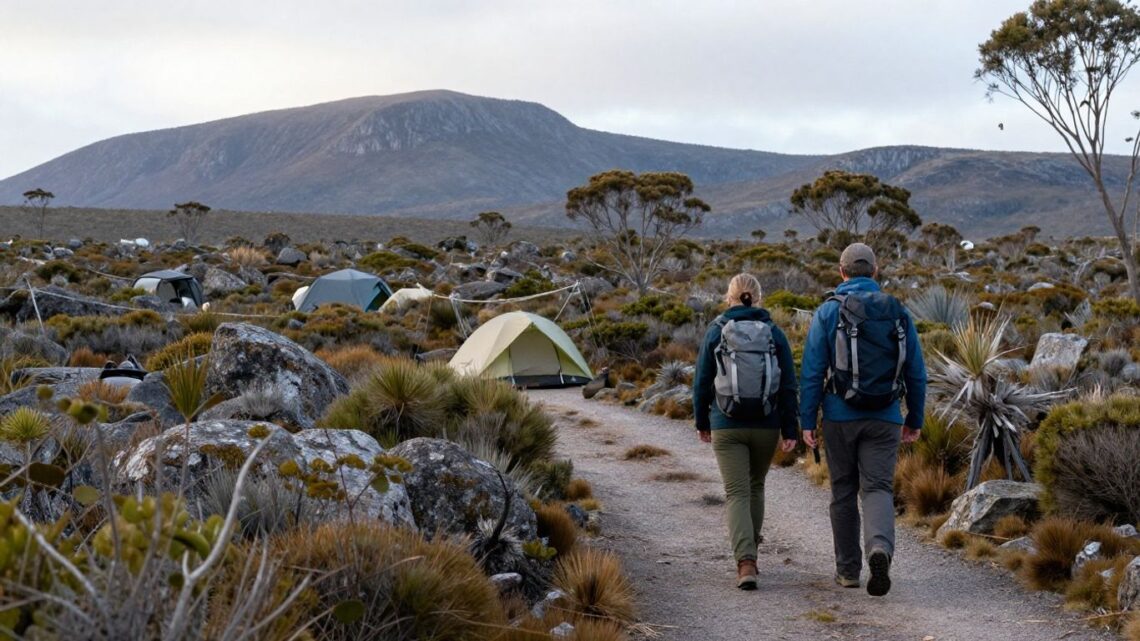
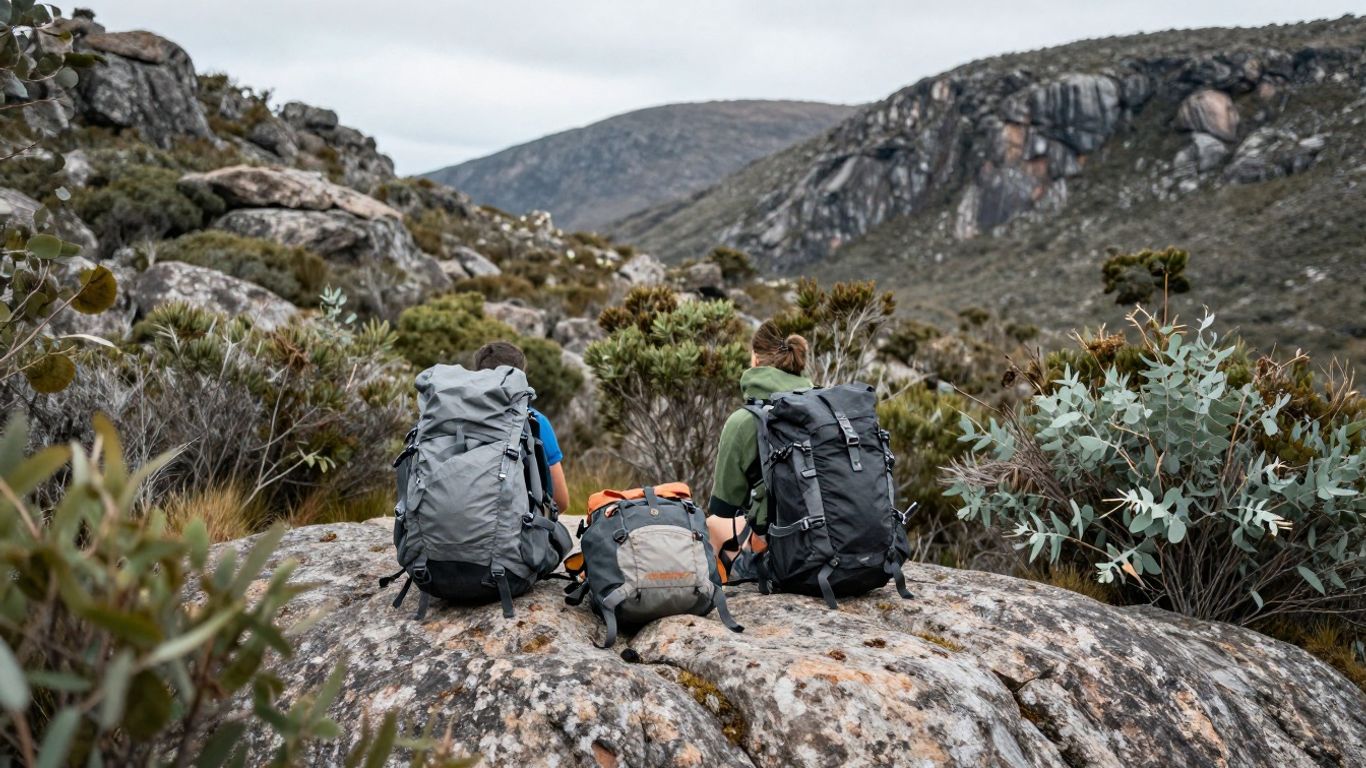
On a formed track, we should stay on the track, even when a muddy patch tempts us to step around it. Those small detours can widen a trail over time, particularly where many visitors repeat them. At camp, choosing an existing site where available avoids creating another bare patch in the bush.
Follow signs and local directions, and keep tents and cooking activity within the established area. The site is there to be used, not redesigned; we can leave the saw, shovel and grand landscaping ambitions at home.
Protect fragile ground by spreading out in resilient areas
Some surfaces tolerate footsteps better than others, but resilience depends on the place and conditions. Rock, gravel and already bare ground may be suitable in one setting, while soft soils, damp vegetation or fragile habitats can be easily damaged. We should follow local guidance and avoid walking over plants simply to make our group look less like a group.
When stopping for a break, gather on a durable patch rather than creating several new resting spots. If a campsite or track is already showing signs of wear, avoid enlarging the affected area and keep our activity within its established footprint.
Set up camp away from water and avoid enlarging existing sites
Waterways are lovely places to pause, but camping right beside them can disturb the ground and leave waste too close to where people and wildlife collect water. Choose a site set back from the water in line with local rules, and use an established campsite when one is provided. The view may be slightly less immediate; the stream will survive the separation.
Keep the camp compact and use the space already available rather than clearing extra ground. A small, tidy footprint makes it easier to pack up without leaving a new campsite behind.
Dispose of waste without leaving a trace
Whatever we carry into the bush, we are responsible for carrying out again unless local facilities or rules say otherwise. Food scraps count as rubbish, even if they seem harmless or biodegradable. They can attract animals and leave an untidy reminder of a meal that was otherwise excellent.
Pack out all trash, food scraps, and hygiene products
Before leaving camp, check the cooking area, tent spots and places where we paused along the way. Pick up wrappers, crumbs, fruit peel and anything else we brought with us. Hygiene products belong in a sealed bag for disposal later, not tucked beneath a rock or left beside a track.
A small packing routine makes this easier to remember. We can keep separate bags for different kinds of waste:
- Food wrappers and packaging
- Scraps and leftover food
- Used hygiene products
- Small bits of rubbish gathered along the way
At the end of the trip, check every pocket and shared area before driving off. That last sweep is often when the supposedly vanished snack wrapper turns up in a side pocket.
Handle human waste according to local rules and terrain
Toilets may be available at popular sites, while remote areas can have different requirements. We should check local directions before the trip and use facilities where provided. Where no facility is available, follow the land manager’s guidance for the terrain and pack out what the rules require.
Toilet paper and hygiene products should not be left behind. A suitable trowel and a sealable bag may be part of the plan where local guidance calls for them, but there is no single method that fits every place. The useful rule is to know what applies before we need to know it urgently.
Strain dishwater and scatter it well away from water sources
After a meal, remove food scraps from washing-up water and carry them out with the rest of our rubbish. Follow local guidance on how to dispose of the strained water, keeping it well away from waterways and drainage areas. Pouring it beside a stream is convenient, but convenience is not the same as care.
Use only as much water as needed and avoid washing directly in a lake or stream. A little thought at the end of dinner keeps food residue and soap out of places we came to enjoy in their natural state.
Leave what you find for the next curious wanderer
A good walk gives us plenty to look at without requiring souvenirs. Plants, rocks, shells and cultural features belong to the place and can matter to people and wildlife in ways we may not see. We can take photographs and memories, which are considerably easier to carry home.
Admire plants, rocks, and cultural artifacts without taking them
Leave natural objects where we find them, including fallen wood, flowers, feathers and interesting stones. Removing even one item can change the experience for the next person, and cultural objects may have particular significance and protections. We should observe from a respectful distance and follow any signs or site-specific directions.
A photograph lets us remember a detail without taking it away. It also means we do not have to explain to the rest of the group why our pack now contains a suspiciously heavy rock.
Avoid carving, digging, or rearranging natural features
Carving a name into a tree or shifting stones to make a little monument leaves a mark that outlasts the moment. Avoid digging, building structures or changing the shape of a natural feature unless local instructions specifically allow an activity. Even a small alteration can invite others to add their own.
We can keep our rest stops comfortable without rearranging the site. Use the ground as it is, and leave the next visitors the same view we had.
Clean gear to keep seeds and invasive species from hitching a ride
Mud, seeds and plant matter can travel on boots, tent fabric and other equipment. Before moving between areas, check and clean gear as recommended by local guidance. This is particularly useful after walking through wet or overgrown places, where small hitchhikers are easy to miss.
Give footwear, clothing and equipment a quick inspection before packing them away. A few minutes of cleaning at home or at an appropriate wash-down point can help keep unwanted seeds from travelling with us.
Minimize campfire impacts
An open fire can feel like the centrepiece of a camp, but it is not always permitted or appropriate. Fire restrictions and conditions vary, and a safe decision in one place may be a poor one somewhere else. We should check the current rules and consider whether a fire is needed at all.
Use a stove when fires are unnecessary or restricted
When fires are prohibited, the choice is straightforward: do not light one. When they are permitted, a camp stove can be a practical way to prepare food without creating a fire scar or collecting fuel. We should use it safely and follow the instructions for the equipment and location.
A stove also makes it easier to keep a meal simple when conditions are poor. That may not be campfire theatre, but dinner is still dinner.
Build fires only where permitted and use established fire rings
If fires are allowed, use an established fire ring or the location specified by the land manager. Do not make a new ring by moving rocks or scraping away vegetation. Check for restrictions before collecting or using fuel, and never assume that a familiar campsite has the same rules as last time.
Keeping the fire in its designated place limits unnecessary damage. If the site has no suitable permitted place, we should leave the fire idea for another trip.
Burn small fires completely and extinguish them until cold
Where a fire is permitted, keep it small and use only the fuel allowed at that site. Before leaving, extinguish it thoroughly and make sure it is cold, following local directions. A fire that looks finished can still hold heat, so we should take the time to check rather than trust appearances.
Pack out rubbish and unburnt food instead of feeding them to the flames. The goal is to leave the area without ash, scraps or a lingering risk for the next visitors.
Respect wildlife, even when it looks photogenic
Seeing an animal in its own habitat can be a highlight of a trip, and a good reason to slow down. We can enjoy the moment without crowding the animal or changing its behaviour. A photograph is never worth turning a calm encounter into a stressful one.
Observe animals from a safe distance and never feed them
Give wildlife room to move, feed and retreat without having to pass close to us. Use a camera zoom rather than stepping nearer, and leave animals alone if they show signs of disturbance. Feeding wildlife can encourage animals to associate people with food, which is poor news for both sides of the encounter.
Keep food to ourselves and avoid calling or pursuing animals for a better view. The best sighting is one in which the animal carries on as if we were not there.
Store food and scented items securely
Food, rubbish and other scented items should be stored in the way local guidance recommends. Secure storage helps reduce the chance that animals will investigate a campsite, and it keeps us from discovering that a clever visitor has opened the pantry overnight. Check the rules for the area before choosing what storage to bring.
Keep meals and snacks contained when not in use, and do not leave scraps around the cooking area. A clean camp is easier to pack up and less likely to invite wildlife to dinner.
Give nesting, resting, and young wildlife extra room
Nesting sites, dens and animals with young call for extra space and quiet. If we notice signs of distress or repeated movement away from us, we should retreat and choose another route or viewpoint. Never approach a young animal in the hope that its parent is just out of frame.
Follow seasonal closures and posted directions, even when the restricted area seems small. Giving wildlife room is a simple way to let it get on with its day.
Be considerate of other visitors
The outdoors belongs to many kinds of visitors: people seeking a quiet walk, families taking a slow afternoon and groups heading further into the bush. Courtesy helps everyone share the track without turning a peaceful outing into a negotiation. A friendly greeting and a little awareness go a long way.
Keep noise low and yield politely on shared trails
Keep conversation at a level that suits the setting, and pay attention to other track users when paths narrow. Follow local trail etiquette and yield politely where needed, without assuming every encounter works the same way. A calm pause is generally easier than a footrace over who gets to the next bend first.
If a group is spread out, gather safely where there is room rather than blocking the track. That small bit of patience keeps the path moving for everyone.
Let nature set the playlist by skipping speakers
Portable speakers carry much further outdoors than we might expect. Leave them off and enjoy the sounds of the place, or use headphones at a level that still lets us notice our surroundings. Other visitors may have come for quiet, and wildlife does not need our music selection either.
We can keep conversation and calls low, especially near campsites and shared facilities. The bush provides a soundtrack; no one needs to curate it.
Leave campsites and shared facilities ready for the next group
Before leaving, put gear away, pack out all rubbish and check that shared areas are as clean as we found them. Follow any site-specific instructions for toilets, cooking areas and waste. A tidy departure means the next group can arrive without inheriting our breakfast.
Take one last look around the tent and cooking spots, including under tables and near the fire area. If we found the place ready to use, we can return the favour.
Conclusion
A leave no trace guide is most useful when its advice becomes part of how we plan, travel and pack up. We do not need to make a production of it: check the local conditions, tread thoughtfully, carry out what we bring in and give people and wildlife room. Then the place can remain itself for whoever visits next.
Frequently Asked Questions
What does Leave No Trace mean?
It means making choices that reduce our impact on natural and cultural places, from planning the trip to checking the campsite before we leave.
Should we always stay on established tracks?
Where tracks are available, staying on them helps prevent widening and the creation of new paths. Follow local directions, especially in areas where walking off track is managed differently.
What rubbish should we carry out?
Carry out all rubbish and food scraps, along with hygiene products and anything else we brought. Check local instructions for any specific facilities or disposal requirements.
How should we deal with human waste outdoors?
Use toilets where provided and follow the land manager’s guidance when facilities are unavailable. The right approach depends on local rules and terrain, so check before the trip.
Can we have a campfire?
Only if fires are permitted at that place and time. Check current restrictions, use an established fire ring where directed, and extinguish any permitted fire until it is cold.
How close should we get to wildlife for a photograph?
Stay far enough away that the animal can move and behave naturally. Use a zoom rather than approaching, and give nesting animals and young extra space.
Why should we clean our boots and camping gear?
Seeds, soil and plant matter can cling to footwear and equipment and travel to new areas. Checking and cleaning gear helps prevent unwanted hitchhikers from moving with us.


You May Also Like
The leave no trace guide: How to enjoy the outdoors without becoming the plot twist
Leave no trace guide: seven principles for enjoying the outdoors without becoming the story